Explorers · about 4-6% of people
ISTP Personality Type: The Virtuoso
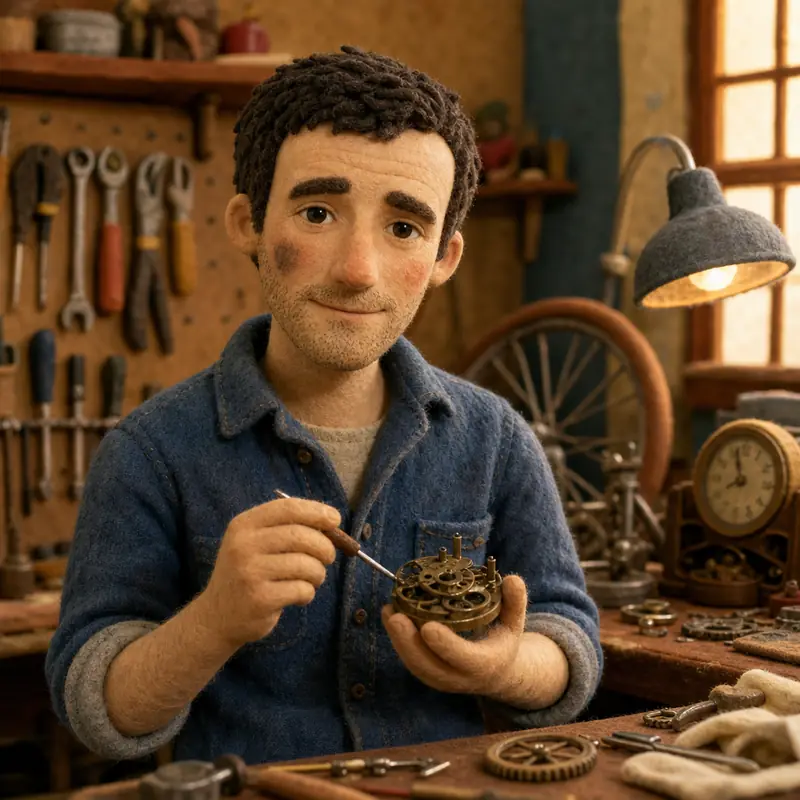
Bold and practical experimenters, masters of all kinds of tools.
They'll fix your broken shelf, your car engine, or your argument, whichever you put in front of them first. ISTPs are hands-on problem solvers who learn by doing, not by reading the manual. Calm under pressure, mechanically gifted, and allergic to unnecessary meetings.
Cognitive function stack: Ti → Se → Ni → Fe, dominant first. Preferences describe tendencies, not boxes. Most people sit closer to the middle than the four letters suggest.
ISTP strengths and growth areas
Every strength below has a shadow side, and every growth area is a strength pushed slightly too far. No trait is bad.
Signature strengths
- Crisis management
- Practical skill
- Rationality
- Adaptability
- Resourcefulness
- Calm under pressure
Where ISTPs grow
- Emotional expression
- Long-term planning
- Sensitivity to others
- Commitment
The Virtuoso at work
An ISTP at work says little, watches everything, and then fixes the thing while the meeting about the thing is still finding a slot.
How ISTPs communicate at work
ISTPs demonstrate rather than describe. Their best conversations happen next to the actual problem, tools in hand, not in a status update. They are concise to the point of minimalism: "fixed" is a complete sentence to an ISTP, and usually a true one. They stay calm when things break, answer honestly when asked, and if one volunteers an opinion unprompted, it has already survived internal review and is worth hearing.
What an ISTP needs from a team
They need concrete problems, room to experiment, and tolerance for quiet; their silence is concentration, not detachment from the team. Autonomy is close to non-negotiable: tell them the outcome and stand back. Spare them performative collaboration and ceremony-heavy process. Judge them on outcomes rather than airtime and you will get outcomes, reliably, with a minimum of drama.
Friction to watch for
Their reserve can be misread as disengagement, and their impatience with process theatre can mean fixing something before the group agreed on the fix, which occasionally breaks something social. Long-horizon planning holds limited charm, and documentation happens under protest. Give them the urgent and the broken, pair them with a planner for the eighteen-month view, and ask for the write-up as a favour, not a form.
Working with an ISTP? See your whole team's types on one map.
Map your team's typesCareers where ISTPs tend to thrive
Fit comes from the day-to-day of a role, not its title. Treat these as starting points, not verdicts.
Still asking what career is right for me? Ten minutes of honest answers will narrow it down.
Famous people often typed as ISTP
Public figures are typed by observers, not by taking the test, so hold these lightly.
- Bruce Lee Martial Arts
- Amelia Earhart Aviation
- Clint Eastwood Film
- Bear Grylls Adventure
- Michael Jordan Sports
- Scarlett Johansson Film
Types that pair well with ISTP
Good pairings balance each other; the differences do the work. Explore the types this one most often clicks with.
Want the scientific version of this profile?
A four-letter type gives you a memorable shorthand; the Big Five gives you measurements. ISTPs typically sit near the middle of most trait scales, a balanced profile the four-letter code cannot show, because it only records which side of each line you fall on. Our free Big Five test scores five domains and 30 facets against adult norms, so you see where you actually sit instead of which side of a line you fall on.
Take the free Big Five testThink you might be an ISTP?
Take the free 16 Types test and see which of the 16 types fits you best. About 8 minutes, no sign-up, instant results.
Myers-Briggs Type Indicator, Myers-Briggs and MBTI are trademarks or registered trademarks of The Myers & Briggs Foundation in the United States and other countries. SeeMyPersonality is not affiliated with, and this test is not endorsed by, The Myers-Briggs Company or the Foundation. Our 16 Types test is an independent instrument that is not the MBTI assessment.