The ESFJ Personality Type
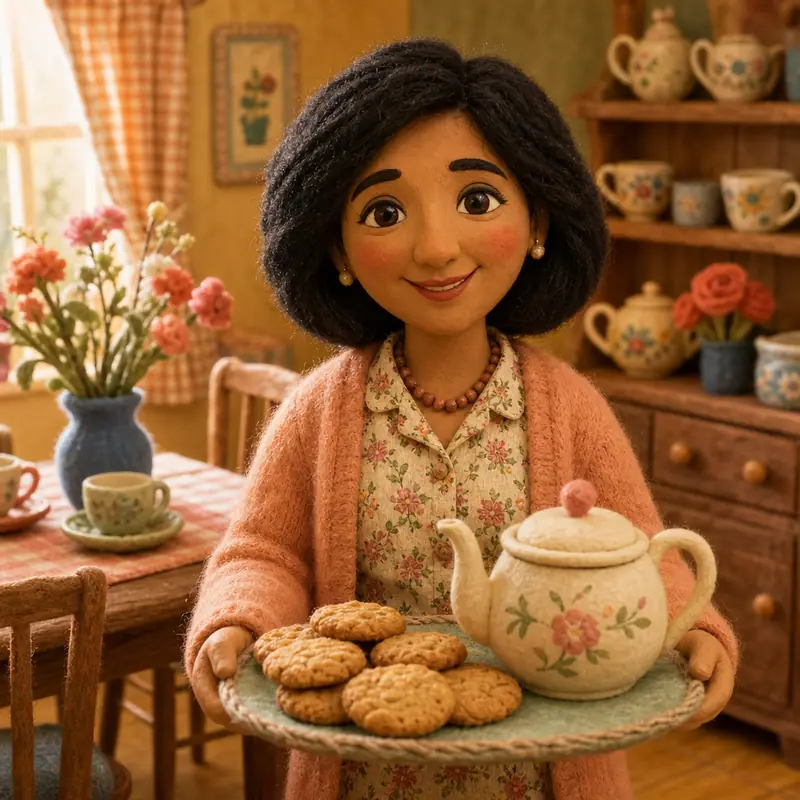
ESFJs are the people who remember your birthday, ask how your sister's surgery went, and quietly host the gathering that holds the family together. They're warm, sociable carers wired to attend to others — not from duty, but because the wellbeing of the group is, for them, the wellbeing of the self.
What Is an ESFJ?
The four letters give you the surface. The cognitive functions describe the engine underneath.
ESFJs are warm, sociable carers who often hold groups together. Often called The Consul, they’re the people who turn separate individuals into something more like a class, a family, a team, a congregation, a neighbourhood, or a circle of friends. ESFJ stands for Extraverted, Sensing, Feeling, Judging: outwardly engaged, practical, people-centred, and drawn to order. The Myers & Briggs Foundation’s frequency table places ESFJ at about 12.3% of the US population, making it one of the most common MBTI types.1
The core ESFJ drive is simple to name and hard to keep up: helping the people they love feel connected, looked after, and at ease. They remember birthdays, food preferences, family rituals, old promises, workplace moods, and the small facts that let others feel seen. At their kindest, ESFJs make care concrete. They don’t merely feel concern from a distance. They bring the soup, book the room, send the reminder, introduce the shy person, and stay late to clean up.
That generosity can be mistaken for fussiness if we only watch the surface. The deeper story is that ESFJs often experience belonging as something handmade. Someone has to notice the awkward silence. Someone has to make the plan. Someone has to ask who’s been left out. Very often, the ESFJ has already begun.
ESFJ at a Glance
- Population: ~~12% (the one of the most common type)
- Nickname: The Consul / The Provider
- Group: Sentinels (SJ)
- Cognitive stack: Fe, Si, Ne, Ti
- Often typed as: Taylor Swift, Bill Clinton, Jennifer Lopez
- Core drive: Keeping the people they love connected, looked after, and at ease
Population estimates per the Myers & Briggs Foundation's frequency-of-type data
The Cognitive Function Stack
Four mental processes, stacked in order of strength. This is the engine room of the ESFJ mind.
Fe — Extraverted Feeling (Dominant)
The ESFJ's strongest gear. Fe reads the emotional temperature of a room with an accuracy most types only manage with effort. ESFJs notice when a friend is quieter than usual, when a colleague's smile doesn't reach their eyes. The instinct is to act on that read — to soothe, include, remember. Their decisions weigh heavily on what's good for the people in front of them, which is both their strength and their occasional trap.
Si — Introverted Sensing (Auxiliary)
Si gives ESFJs their long memory for what people like, what hurt them last time, and what tradition holds the family together. They remember birthdays without an app. They know which mug belongs to which guest. Si keeps the ESFJ grounded in concrete reality — recipes, routines, anniversaries — and gives them a tested sense of what works.
Ne — Extraverted Intuition (Tertiary)
Ne develops more with age. A young ESFJ may stick close to the way things have always been done; a more mature ESFJ becomes surprisingly playful with new ideas, alternative arrangements, fresh ways to approach a problem. It rarely overrides Fe and Si, but it adds spark — the willingness to try a new recipe or move the family Christmas to someone else's house.
Ti — Introverted Thinking (Inferior)
The shadow function. Ti concerns impersonal logic and internal consistency, and ESFJs often struggle here. Under stress, an ESFJ may suddenly fixate on logical contradictions, demand evidence with uncharacteristic sharpness, or feel trapped by abstract critique that bypasses how people will be affected. Mature ESFJs learn to use Ti as a sense-check rather than a stress weapon.
The ESFJ Way of Operating
Outward style and inner pattern.
The public ESFJ is often easy to spot. They greet, include, coordinate, thank, repair, and remember. They may become the unofficial host in a room they don’t own. If a meeting is vague, they ask who’s doing what by Friday. If a friend is ill, they organise food. If a party feels stiff, they start the conversation that lets others breathe. The Myers & Briggs Foundation’s official type description centres on warmth, conscientiousness, cooperation, loyalty, follow-through, and attention to day-to-day needs.2 That description is fair, but a little neat. The deeper point is that many ESFJs experience other people’s comfort as a responsibility.
The private ESFJ is less tidy. Behind the sociable surface there can be a running account of small worries: Did I do enough? Are they upset? Did I disappoint them? Why didn’t they say thank you? An ESFJ may look confident because they know how to behave in a room, yet feel deeply dependent on signs of appreciation. This is the paradox that gets them misread. Others may call them controlling when they’re trying to prevent pain, or conventional when they’re trying to protect belonging. A mature ESFJ slowly learns that not every silence is rejection, not every difference is disloyalty, and not every awkward feeling needs immediate repair.
Culture adds another layer. Searches for ESFJ female and ESFJ male often carry assumptions about what care is supposed to look like. ESFJ women may be praised for warmth and then quietly overused, expected to remember everyone’s needs while asking for little. ESFJ men may be misread because hospitality, emotional attentiveness, and loyalty to the group are wrongly coded as feminine in many settings. A healthy ESFJ man may be the coach who checks on every player, the manager who knows whose parent is ill, or the friend who keeps the group alive after everyone else has become busy.
ESFJ isn’t shallow niceness. It isn’t blind obedience to tradition, and it isn’t everyone’s parent. The same outward care can come with strong memory, moral seriousness, and a real fear of letting people down. ESFJs often do the invisible labour that lets a group feel natural: the message sent at the right time, the extra chair, the check-in after a difficult conversation, the ritual kept alive because it still means something. Their pattern describes a way of making belonging, not a measure of anyone’s worth.
What ESFJs Do Best
Warmth
ESFJs make people feel seen. Their warmth isn't performative — it's a genuine attention to who's in the room and what they might need. The colleague who notices you skipped lunch is often an ESFJ.
Practical Care
Their love shows up as casseroles at the funeral, lifts to the airport, and the 'just checking in' text that arrives the day you needed it. ESFJs translate feeling into deeds.
Loyalty
Once an ESFJ commits to a person or community, they stay. They show up to weddings, funerals, awkward birthdays, school plays — the recurring scaffolding that holds long relationships together.
Organisational Glue
ESFJs run the rota, host the dinner, write the thank-you cards. They keep groups functioning by doing the small, repetitive social work most people forget.
Reading the Room
Fe at full power. ESFJs sense who's hurting, who's left out, who needs a kind word and who needs space. Their social radar is rarely wrong.
Reliability
ESFJs do what they said they would. Their word is currency, and they spend it carefully. The PTA, the church committee, the work team — all run smoother because an ESFJ keeps the promises.
Where ESFJs Struggle
The same wiring that produces reliability and execution can produce inflexibility and emotional misreads.
People-Pleasing
ESFJs can lose track of their own needs in service of harmony. They say yes when they mean no, then resent the agreement they made. Learning to disappoint someone with grace is a lifelong ESFJ practice.
Conflict Avoidance
Fe craves harmony, so ESFJs often paper over disagreements that needed airing. The unspoken thing festers, then erupts months later in a row that surprises everyone. Honest small conflicts protect long relationships.
Resistance to Change
Si trusts the tested way. When the family or workplace tries something new, ESFJs can quietly grieve the old form before they accept the new one. Mature ESFJs learn to ask whether the tradition still serves the people, or just the memory.
Sensitivity to Criticism
Because care is so central to ESFJ identity, criticism — especially of how they treated someone — can land hard. The fix isn't thicker skin. It's the slow practice of separating 'I made a mistake' from 'I am unloved.'
A note on ESFJ self-care
ESFJs who carve out time to be cared for, rather than always doing the caring, tend to age into steadier versions of themselves. The hardest sentence for an ESFJ to say out loud is, 'I need help.' Saying it anyway, to people who've earned the right to hear it, is one of the most generous things an ESFJ can do.
Work That Fits the ESFJ
ESFJs thrive where their natural strengths align with the work.
ESFJ careers tend to fit when care has a structure. The satisfying role lets an ESFJ help real people in visible ways, follow clear standards, work with others, and see the result of their effort. This is why many ESFJs are drawn to teaching, nursing, healthcare administration, dental hygiene, social work, community leadership, hospitality, human resources, customer success, office management, public relations, childcare, school administration, religious service, and charitable work. Career writing using MBTI type tables has long treated occupations as places where some preference patterns become more common, while also warning that type should open options rather than close them.5
The stronger anchor comes from trait psychology. ESFJs often resemble a Big Five pattern of higher Extraversion, Agreeableness, and Conscientiousness. In a major job-performance meta-analysis, Conscientiousness related consistently to performance across occupational groups, while Extraversion was especially relevant in social roles such as management and sales.6 That fits the ESFJ advantage: reliable follow-through plus social energy. In nursing education research, one study found that the modal type among first-year baccalaureate nursing students was ESFJ, while faculty most often typed as ISTJ.7 That doesn’t mean ESFJs belong in nursing by nature. It means people-care fields often attract habits ESFJs already practise.
Work becomes draining when the ESFJ has to detach from human consequences for too long. Purely solitary analysis, unclear authority, cynical cultures, constant conflict, or workplaces that reward cold competition can leave them depleted. They may also struggle when kindness is treated as free labour: the birthday cards, the emotional clean-up, the remembering of who needs what, all quietly added to the job description. A good career plan for an ESFJ should ask: Will I work with people? Will my contribution be seen? Will there be enough order to let me care well? If you’re matching personality to work, use type as one clue and pair it with interests, values, skills, labour-market facts, and our career personality test.
Teacher / Educator
The classroom rewards Fe warmth and Si structure in equal measure.
Nurse / Healthcare
Practical care under pressure — ESFJs over-represent in nursing for good reason.
Event Planner
Logistics married to social attentiveness. ESFJs make events feel hosted, not just held.
HR Manager
The role designed for someone who reads people accurately and follows through reliably.
Hospitality Manager
Hotels and restaurants live or die on small attentions. ESFJs notice them.
Social Worker
Combines the ESFJ's compassion with their stamina for the unglamorous follow-through.
Office Manager
The person who keeps the office actually working — supplies, schedules, mood.
Counsellor / Coach
Helping people through structured care, with practical steps and real warmth.
Not sure which direction to go? Our career personality test can help you match your traits to specific roles.
Relationships and the ESFJ
How ESFJs show up in love and partnership.
In relationships, the ESFJ shows love through attention. They remember the details. They introduce you proudly. They ask whether you’ve eaten. They plan the birthday before you mention it. They try to make your family feel included, or at least treated with respect. Their love often comes as service, loyalty, words of affirmation, and shared ritual. What they need back is not flattery. It’s visible appreciation. A partner who silently values them but rarely says so may leave the ESFJ starving beside a full cupboard.
Older ESFJ compatibility theory often says ESFJs match well with partners who appreciate care, share daily-life values, and bring either steadiness or gentle contrast. Depending on the system, you’ll see ESFJ paired with ISFJ, ISTJ, ESTJ, ESFP, ISFP, ENFJ, or even INTP. Treat those charts carefully. The Myers & Briggs Foundation says there are no universally more successful type pairings, and that maturity matters more than the number of letters two people share.8 Relationship science says something similar in a different language. A meta-analysis of Big Five traits and partner satisfaction found that lower Neuroticism, higher Agreeableness, higher Conscientiousness, and higher Extraversion were linked with a partner’s relationship satisfaction.9
The practical lesson is kinder than the charts. ESFJs are often happiest with people who are appreciative, reliable, emotionally available, and willing to talk about household and family expectations before resentment grows. Type can shape friction, but it doesn’t decide the fate of a couple. A large machine-learning study across 43 longitudinal couple datasets found that relationship-specific factors such as perceived partner commitment, appreciation, sexual satisfaction, perceived partner satisfaction, and conflict were the strongest self-report signs of relationship quality.10 In plainer terms, the life two people build together often matters more than the label each person brings into it.
The ESFJ’s friction points usually come from the same place as their gifts. They may treat a partner’s need for solitude as emotional distance. They may hear blunt analysis as cruelty. They may keep score around gratitude, then feel ashamed for needing gratitude at all. They may over-function, taking on too much practical and emotional labour, then become hurt when others don’t notice the invisible bill. Partners can misread this as neediness. Often, it’s exhaustion with a polite face.
The repair is not for ESFJs to become less caring. It’s for them to care with cleaner boundaries. Mature ESFJs learn to ask directly rather than hint, to let loved ones have moods without rushing to fix them, to receive criticism without turning it into exile, and to say, 'I want to help, but I can’t take this on.' They also learn that love can be quiet. An introverted partner may be devoted without being demonstrative. A Thinking partner may be loyal through problem-solving. If relationship patterns feel larger than type, our free attachment style test can give another lens.
At their healthiest, ESFJs don’t demand that love look exactly like their own care. They learn to recognise the sincere but quieter forms: the repaired hinge, the honest budget, the ride to the station, the calm presence after a hard day. That recognition protects both people. It lets the ESFJ keep giving without turning devotion into a debt ledger.
Curious about your own compatibility?
Our free attachment style test maps how your attachment style interacts with a partner's, highlighting where you'll harmonise and where friction is likely. It's not a verdict. It's a starting point for conversation.
Famous People Often Typed as ESFJ
Type analysis of public figures is educated guesswork, not diagnosis. But patterns emerge.
Taylor Swift
Famously attentive to her fans, generous with friends, deeply loyal to her inner circle. The Eras Tour was a Fe masterclass — she made millions of strangers feel personally addressed.
Bill Clinton
His political superpower was making whoever he was speaking to feel like the only person in the room. That's Fe at full strength, paired with the ESFJ's appetite for people.
Jennifer Lopez
Performer, mother, businesswoman — and famously protective of family. The ESFJ blend of public warmth and private fierce loyalty.
Steve Harvey
His broadcasting style is built on reading the room and warming it up. The ESFJ host instinct, scaled to television.
Sally Field
'You like me, you really like me' was teased at the time, but it's also a textbook Fe vulnerability — the longing for genuine connection laid bare in public.
Hugh Jackman
Renowned in the industry as gracious and present with cast and crew. The ESFJ professionalism — care that scales with the spotlight rather than thinning under it.
What unites these figures is a public warmth backed by genuine attention. ESFJs at the top of their craft don't just perform connection — they extend it.
Fictional ESFJs You Might Recognise
Writers tend to give their disciplined, duty-bound characters a distinctly ESFJ flavour.
Molly Weasley (Harry Potter)
The ESFJ matriarch in concentrated form: fierce protector, prolific feeder, keeper of family ritual, unafraid to fight Bellatrix when her child is threatened.
Monica Geller (Friends)
The host. Thanksgiving dinners, colour-coded labels, devotion to friends — and the brittleness when chaos disrupts her order. A loving, recognisable ESFJ portrait.
Captain America / Steve Rogers
Often typed as ESFJ for his loyalty, traditionalism, and instinctive defence of the team. Duty pointed outward, toward people, not abstractions.
Samwise Gamgee (Lord of the Rings)
Steady devotion to Frodo through impossible terrain. Sam's love is concrete: cooked meals, remembered birthdays, refusing to let his friend fall. The ESFJ in heroic form.
Character typings are illustrative; fictional characters can't be formally typed.
What People Get Wrong About ESFJs
"ESFJs are gossips"
ESFJs talk about people because they care about people. The line between concerned discussion and gossip is real, and mature ESFJs guard it. Confusing attentiveness with malice misses what's actually going on.
"ESFJs are conformists"
ESFJs respect tradition because tradition holds groups together, not because they can't think for themselves. Threaten the people they love and you'll see how unconventional an ESFJ can become.
"ESFJs are needy"
They give attention freely and notice when none comes back. That's not neediness — it's a fair expectation of reciprocity from people who've taken without giving. The ESFJ ledger has receipts.
"ESFJs can't handle conflict"
They prefer to avoid it, which isn't the same as being unable. When the harm is real, ESFJs can be remarkably direct — especially when defending someone they love.
ESFJ Through a Big Five Lens
The MBTI gives you a type. The Big Five gives you a profile. Here's how ESFJ translates.
Through the Big Five, the typical ESFJ pattern is fairly readable: higher Extraversion, higher Agreeableness, higher Conscientiousness, and often lower-to-moderate Openness to Experience, especially when Openness means abstraction, novelty, or untested possibility rather than warmth or aesthetic taste. The IPIP summary of the Five-Factor Model names Extraversion, Agreeableness, Conscientiousness, Neuroticism, and Openness as the five broad factors used in much trait research.11 In MBTI terms, E roughly maps to Extraversion, F to Agreeableness, J to Conscientiousness, and S to lower Openness. McCrae and Costa’s 1989 study made this MBTI and Big Five correspondence explicit, while also arguing that MBTI categories shouldn’t be treated as hard either-or boxes.4
The missing Big Five trait is Neuroticism: emotional volatility, threat sensitivity, worry, and stress reactivity. MBTI doesn’t measure it directly. That omission explains why two ESFJs can look identical on a four-letter result and feel very different in daily life. One ESFJ may be calm, trusting, and steady under pressure. Another may be just as warm and organised, yet far more anxious about rejection, criticism, and social failure. This is the cleanest way to understand ESFJ-A vs ESFJ-T. The A/T distinction comes from NERIS-style Type Explorer systems, not the official MBTI. In Big Five language, ESFJ-A usually points towards lower Neuroticism or higher emotional stability; ESFJ-T points towards higher Neuroticism, more self-questioning, and greater sensitivity to disapproval.
This is why pairing MBTI with Big Five can be so useful. MBTI gives a story of preferred attention and decision style. Big Five gives degree: how social, orderly, emotionally reactive, agreeable, or open someone is compared with others. If you want the research-led contrast, read our guide on how MBTI and Big Five differ, then take a Big Five personality test. The two models answer different questions. One is a language of type preferences; the other is a trait model built for measurement.
Big Five traits also have stronger empirical support for stability and change across adulthood. Large reviews find that traits are moderately stable, tend to become more stable into midlife, and can still change across the lifespan.12 That is a humane ending to the argument. Personality is real enough to matter, but not so fixed that we’re trapped. ESFJ, seen through this lens, is a pattern of tendencies: social warmth, practical loyalty, order, care, and varying degrees of emotional steadiness. It’s a description of where someone often begins, not a sentence about where they must end.
Frequently Asked Questions About ESFJs
The things people actually search for when they discover this type.
What does ESFJ stand for? +
ESFJ stands for **Extraverted, Sensing, Feeling, Judging**. Extraverted means attention tends to move outward towards people and activity. Sensing points to concrete facts, memory, and practical detail. Feeling means decisions often centre on human impact and values. Judging points to structure, plans, and closure.
Are ESFJs rare? +
No. ESFJs are usually listed among the more common MBTI types. The Myers & Briggs Foundation frequency table places ESFJ at about **12.3% of the US population**.<sup><a href="#ref-1">1</a></sup> They may feel rarer in some online personality spaces because those spaces often attract more introverted and intuitive users.
What are the main ESFJ personality traits? +
Common ESFJ traits include warmth, sociability, loyalty, practical helpfulness, conscientiousness, memory for personal details, respect for traditions, and a strong wish for harmony. Less comfortable patterns can include people-pleasing, sensitivity to criticism, reluctance to disappoint others, and frustration when their care isn’t recognised. Healthy ESFJs become both kind and direct.
What careers suit ESFJs best? +
ESFJs often suit careers where they can help people through organised, practical work. Examples include teaching, nursing, healthcare support, social work, human resources, hospitality, customer success, office coordination, childcare, community work, religious service, and public relations. The fit is strongest when the workplace values both competence and care, and when kindness isn’t quietly treated as unpaid extra labour.
Who are ESFJs most compatible with? +
ESFJs are often most compatible with partners who are appreciative, reliable, emotionally present, and respectful of shared duties. Some may fit well with ISFJ, ISTJ, ESTJ, ESFP, ISFP, ENFJ, or other types, but there is no single perfect ESFJ match. Research on relationships points more strongly to appreciation, commitment, low conflict, emotional steadiness, and the quality of the shared relationship than to type-pairing formulas.<sup><a href="#ref-9">9</a></sup>
What are the cognitive functions of an ESFJ? +
The common ESFJ cognitive function stack is **Fe-Si-Ne-Ti**: dominant Extraverted Feeling, auxiliary Introverted Sensing, tertiary Extraverted Intuition, and inferior Introverted Thinking. Fe seeks interpersonal harmony, Si remembers what has worked, Ne explores possibilities, and Ti tests inner logic. In a healthy ESFJ, care and reason learn to work together.
Sources Cited Above
- Myers & Briggs Foundation: How frequent is my type? — Myers & Briggs Foundation
- Myers & Briggs Foundation: The 16 MBTI personality types — Myers & Briggs Foundation
- Myers & Briggs Foundation: Type dynamics processes — Myers & Briggs Foundation
- McCrae, R. R., & Costa, P. T. (1989). Reinterpreting the MBTI from the Five-Factor Model perspective — Duke Scholars
- McCaulley, M. H., & Martin, C. R. (1995). Career Assessment and the Myers-Briggs Type Indicator — Journal of Career Assessment
- Barrick, M. R., & Mount, M. K. (1991). Big Five personality dimensions and job performance — University of Iowa Research Online
- Allchin, L., Engler, A. J., et al. Nursing students, faculty, MBTI type, and explanatory style — UConn Digital Commons
- Myers & Briggs Foundation: Personality type and relationships — Myers & Briggs Foundation
- Malouff, J. M., et al. (2010). Five-Factor Model traits and intimate partner relationship satisfaction — Journal of Research in Personality
- Joel, S., Eastwick, P. W., et al. (2020). PNAS study of relationship quality across 43 longitudinal couple datasets — Proceedings of the National Academy of Sciences
- International Personality Item Pool: Scales for Big Five and Five-Factor Model constructs — International Personality Item Pool
- Bleidorn, W., et al. (2021). Personality trait stability and change — Personality Science
About This Page
Sources
Content draws on the Myers & Briggs Foundation's frequency-of-type data, MBTIonline's ESFJ career material, and peer-reviewed personality research. Full reference list above.
Our Position
SeeMyPersonality is built on the Big Five model. We present MBTI content honestly, acknowledging both its cultural value and its scientific limitations. If you want something with peer-reviewed backing, try our Big Five test.
Personality assessments are tools for self-reflection. For clinical decisions, consult a qualified professional.
Types Often Compared to ESFJ
ISFJ — The Defender
The introverted cousin. Same Fe-Si values but inverted: ISFJ leads with private memory and supports with social warmth, while ESFJ leads outward with people-attention.
ENFJ — The Protagonist
Both lead with Fe, but ENFJ pairs it with Ni (vision) where ESFJ pairs it with Si (memory). ENFJ asks where we're going; ESFJ asks who we already are.
ESTJ — The Executive
Shares Sensing and Judging with ESFJ. ESTJ leads with logic and standards; ESFJ leads with feeling and care. Both can be brilliant organisers, by very different routes.
Want the scientific version of your personality?
Our Big Five test measures five traits on continuous scales, with 30 sub-facets underneath. You don't get a four-letter box. You get a profile that captures the difference between an ESFJ who's 60% extraverted and one who's 95% extraverted — plus where you sit on Emotional Stability, the trait MBTI ignores entirely. It's the framework used in peer-reviewed research, clinical settings, and organisations that care about getting personality right.
More MBTI Guides Worth Reading
Deep dives into the science, structure, and patterns behind the 16 types.
Cognitive Functions
The 8 mental processes behind every type.
MBTI Compatibility
Which types pair well, and what science actually says.
MBTI vs Big Five
How the two biggest personality frameworks compare.
What the Letters Mean
E, I, S, N, T, F, J, P decoded plainly.
Rarest Personality Type
Which types are most and least common.
All 16 MBTI Types
Browse every type with traits and careers.
Want a more nuanced picture?
Four letters are a conversation starter. The Big Five Personality Test measures you on 5 continuous traits with 30 sub-facets — so instead of "ESFJ," you get a profile that captures how much of each dimension you actually carry. Same curiosity, more resolution.
Are You Really an ESFJ? Take the Test
Take our free MBTI-style test and find out which of the 16 types fits you best. Want the scientific deep dive? Our Big Five test gives you five trait scores, thirty sub-facets, and a detailed type classification backed by decades of research.